Is OnePlus Shutting Down in 2026? What Happened to the “Flagship Killer”
Published on July 31, 2026 by sanaullah7867@gmail.com
OnePlus was once one of the most exciting smartphone brands in the world. It became famous for offering flagship-level hardware at surprisingly aggressive prices. Its “Never Settle” philosophy created a loyal community and turned the company into one of the biggest challengers to Samsung and Apple.
But in 2026, the OnePlus story looks very different.
The company has confirmed that it is ending new smartphone launches in the United States and Europe. Existing customers in those markets are expected to continue receiving support, including software updates and warranty service. At the same time, OnePlus has been restructuring its business in India, moving toward an online-first model and reducing its traditional offline retail presence.
This has led to a major question:
Is OnePlus shutting down?
The short answer is not everywhere.
OnePlus is going through a major global restructuring, but the situation is different from simply shutting down the entire company. India, in particular, requires careful attention because reports about a future exit have circulated while the company’s India operations have continued.
So what actually happened to OnePlus?
To understand that, we need to go back to where the company started.
OnePlus: From a Startup to the “Flagship Killer”
OnePlus entered the smartphone market in 2014 with a very simple idea:
Give consumers a premium smartphone without making them pay premium flagship prices.
The company launched the OnePlus One and quickly attracted technology enthusiasts.
Its early strategy was different from traditional smartphone companies.
OnePlus focused on:
Powerful hardware
Competitive pricing
Fast and clean software
Online-first distribution
Community-driven marketing
Premium design
Strong performance
Its original philosophy was built around “Never Settle.”
The company’s own early design philosophy talked about giving consumers a better smartphone experience without forcing them to compromise between performance, quality and price.
That positioning was extremely powerful.
Instead of asking consumers to buy an expensive Samsung or Apple phone, OnePlus gave them another option.
And consumers responded.
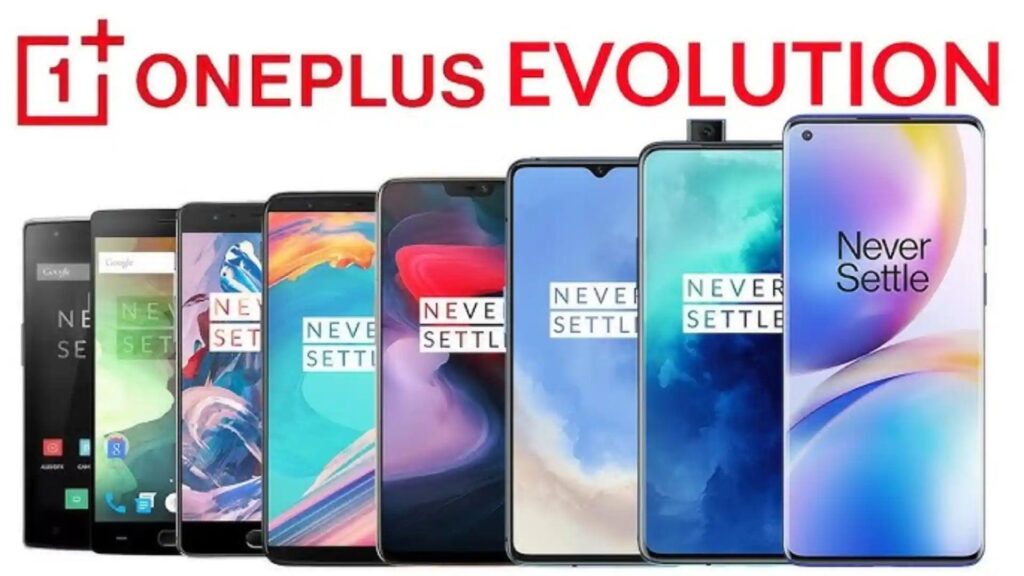
OnePlus’ journey from 2014 to 2026
2014 — OnePlus One The company enters the smartphone market and creates the “flagship killer” idea.
↓
2015–2018 — Community Growth OnePlus builds a strong following among technology enthusiasts.
↓
2019 — Premium Push Products such as the OnePlus 7 Pro show the company’s ambition to compete more directly with premium flagships.
↓
2021 — Deeper OPPO Integration OnePlus and OPPO begin working more closely, changing the company’s long-term structure.
↓
2023–2025 — Increasing Competition OnePlus faces stronger competition from Apple, Samsung, Xiaomi, Vivo, iQOO, Nothing and other brands.
↓
2026 — Global Restructuring OnePlus ends new smartphone launches in the US and Europe and changes its retail strategy in India.
The big question: Can OnePlus reinvent itself without losing what made it special?
Why OnePlus Became So Popular in India
India became one of OnePlus’ most important markets.
The company’s combination of premium design, powerful processors, fast charging and competitive pricing was a strong fit for Indian consumers.
Its online-first approach also matched India’s rapidly growing e-commerce market.
Instead of immediately depending on a huge traditional retail network, OnePlus built demand through:
Online launches
Amazon
Technology communities
Social media
Influencers
Word-of-mouth marketing
This allowed the company to create a strong brand without needing the same physical retail footprint as many traditional smartphone companies.
The result was a strong community of OnePlus users.
For years, owning a OnePlus phone was almost like being part of a technology club.
That community became one of the company’s biggest strengths.
The Problem: The Smartphone Market Changed
The smartphone market that OnePlus entered in 2014 does not exist anymore.
At that time, high-end specifications were expensive.
Today, many smartphone brands offer:
High-refresh-rate AMOLED displays
Powerful processors
Large batteries
Fast charging
Multiple cameras
Premium materials
AI features
Long software support
And they offer them at increasingly competitive prices.
Brands such as Xiaomi, Vivo, iQOO, Realme and Motorola became much stronger.
Samsung also expanded its premium and mid-range portfolios.
Apple remained extremely strong at the top end.
Google continued building the Pixel brand.
Nothing created a new design-focused identity.
The result?
The “flagship killer” formula became much easier to copy.
OnePlus had created a category that competitors eventually learned how to compete in.
OnePlus Had a Bigger Problem: Its Identity Started Changing
This is where the OnePlus story becomes more interesting.
The company’s problem was not simply competition.
It was positioning.
The early OnePlus message was easy to understand:
Premium performance without the premium price.
But as the company grew, it started moving further into the premium smartphone segment.
That created a difficult question:
If a OnePlus phone costs close to a Samsung or Apple flagship, why should the customer choose OnePlus?
This is a common problem for challenger brands.
A company can become successful by offering a cheaper alternative to established brands.
But once it becomes expensive, customers start comparing more than specifications.
They compare:
Brand reputation
Camera quality
Software support
Ecosystem
Resale value
Customer service
Accessories
Retail presence
Long-term reliability
And this is where OnePlus had to compete with much larger ecosystems.
The OPPO Connection Changed the Story
You cannot understand OnePlus’ current situation without understanding OPPO.
OnePlus became increasingly integrated with OPPO, giving the brand access to larger resources and infrastructure.
From a business perspective, this makes sense.
A global smartphone business requires enormous investment.
Companies need to spend money on:
Research and development
Manufacturing
Software
Marketing
Distribution
Retail
Customer service
Logistics
Regulatory compliance
Being part of a larger organization can make those operations more efficient.
But there is another side.
Brand identity can become weaker when two companies become increasingly similar.
OnePlus had built its reputation around being different.
It was the rebellious alternative to traditional smartphone brands.
Closer integration with OPPO raised a difficult question:
What makes OnePlus different from OPPO?
That question has become increasingly important.
OxygenOS Was a Major Part of the OnePlus Identity
For many OnePlus fans, OxygenOS was not just software.
It was part of the brand.
OnePlus became known for a relatively clean and fast Android experience.
The company itself described OxygenOS around its “Fast and Smooth” philosophy.
Over time, however, OnePlus and OPPO became more closely connected at the software and technology level.
This created concern among some long-time users that OnePlus was losing some of its individuality.
For a brand built heavily around community loyalty, this matters.
A customer might forgive a company for changing its hardware.
But if the customer feels that the personality of the brand has changed, loyalty can decline.
The 2026 Turning Point: OnePlus Changes Its India Retail Strategy
One of the clearest signs of OnePlus’ restructuring came in March 2026.
OnePlus confirmed a strategic shift toward a direct-to-consumer, online-first model in India.
Reports said partner-operated exclusive stores were being shut down, while the company focused more heavily on online sales.
This is a major change because OnePlus had spent years building a physical retail presence in India.
The company also planned to use OPPO’s existing infrastructure to expand after-sales service.
According to Moneycontrol, OnePlus planned to increase its authorised service network from around 400 centres to more than 600, covering more than 500 cities.
This is important.
It means OnePlus is not simply abandoning the Indian customer.
Instead, it is changing how the business reaches and supports customers.
Why Would OnePlus Reduce Physical Stores?
Physical retail is expensive.
A smartphone company has to pay for:
Store rent
Employees
Inventory
Distribution
Retailer margins
Distributor margins
Logistics
Store marketing
An online-first model can reduce many of these costs.
It also gives the company more control over pricing and product launches.
For OnePlus, this could mean:
Lower operating costs + direct online sales + broader service coverage.
That is a reasonable business strategy in a highly competitive market.
But it also has disadvantages.
A physical store gives customers the opportunity to:
Hold the phone
Test the camera
Compare displays
Ask questions
Compare models
Build confidence before buying
So OnePlus is making a trade-off.
Less physical retail in exchange for a more efficient business model.
The 5-Step OnePlus Business Case Study
01 — FLAGSHIP KILLER
The original advantage
OnePlus offered high-end specifications at aggressive prices.
↓
02 — COMPETITORS CAUGHT UP
The market changed
Xiaomi, Vivo, iQOO, Samsung, Realme and others began offering increasingly powerful devices at competitive prices.
↓
03 — PREMIUM SHIFT
OnePlus moved upward
The company began competing more directly with premium smartphone brands.
↓
04 — OPPO INTEGRATION
The business became more connected
OnePlus gained access to larger infrastructure and resources, but questions around brand independence and differentiation increased.
↓
05 — GLOBAL RESTRUCTURING
The company changes its strategy
OnePlus ends new smartphone launches in the US and Europe and moves toward a more online-focused strategy in India.
The lesson:
A successful challenger brand must keep giving customers a reason to choose it.
OnePlus Is Leaving the US and Europe
The biggest development in 2026 is OnePlus’ decision to stop new smartphone launches in the United States and Europe.
OnePlus has officially confirmed the withdrawal from these markets.
Existing customers are not simply being abandoned. Support, warranty commitments and software updates are expected to continue for existing devices.
This is a major change from OnePlus’ earlier global ambitions.
The company once wanted to challenge Apple and Samsung internationally.
Now, it is becoming much more selective about where it invests.
Why Are the US and Europe Difficult Markets for OnePlus?
The answer is simple:
Scale.
The US smartphone market is dominated by Apple and Samsung.
Apple has an enormous ecosystem built around:
iPhone
Mac
iPad
Apple Watch
AirPods
Services
Samsung has:
Galaxy smartphones
Tablets
Watches
Earbuds
TVs
Foldables
Long-established carrier relationships
For OnePlus to compete at the same level, it would need enormous investment.
It would also need strong relationships with carriers and retailers.
Europe is similarly challenging because it is a large but fragmented market with different regulations, countries and consumer preferences.
For a company going through restructuring, maintaining expensive operations across these markets may no longer make strategic sense.
Is OnePlus Shutting Down Completely?
This is where many online headlines become misleading.
No, OnePlus has not simply disappeared worldwide.
What is confirmed is that OnePlus is ending new smartphone launches in the US and Europe.
India is more complicated.
There have been reports that OnePlus could eventually reduce or end operations in India as part of OPPO’s wider restructuring.
However, OnePlus has continued operating in India, and its official Indian website continues to list products, retail information and customer support.
Therefore, the correct conclusion is:
OnePlus is undergoing a major global restructuring, not simply shutting down everywhere.
That distinction is important for both consumers and businesses discussing the story.
What Is Happening to OnePlus in India?
India may become one of the most important markets in OnePlus’ future.
The company has already moved toward:
Online-first sales + reduced offline retail + expanded service support.
Its official Indian website continues to provide retail and service information, while OPPO is also expanding its own service infrastructure in India.
There is also evidence that OnePlus is adjusting its product strategy in India.
The company has been expanding beyond its traditional premium positioning, including the newer N Series aimed at a more affordable segment.
That is interesting because it brings OnePlus closer to its original idea:
Give consumers strong hardware without asking them to pay flagship prices.
In other words, OnePlus may be trying to rediscover part of what made it successful.
Did OnePlus Move Too Far Away From Its Original Strategy?
This is one of the most important questions in the entire case study.
OnePlus originally succeeded because it was different.
It did not try to be another Samsung or Apple—it created its own categor
But as the company grew, it started moving toward the traditional premium smartphone model.
That brought higher prices and more direct competition with established brands.
At the same time, competitors improved.
So OnePlus ended up fighting on a battlefield where its competitors had much larger resources.
This does not mean the premium strategy was automatically wrong.
It means the brand needed a stronger reason to exist at the premium price.
The Real Problem Was Not Hardware
OnePlus still makes technically capable smartphones.
The problem is bigger than specifications.
The real challenge is:
Brand positioning.
Consider the difference.
Old OnePlus:
“Why pay ₹70,000 when OnePlus can give you similar performance for ₹40,000?”
Modern premium OnePlus:
“Why choose OnePlus when Samsung, Apple and others already have stronger ecosystems?”
OnePlus has phones, tablets, watches, earbuds and other products, but creating an ecosystem that can compete with Apple or Samsung requires long-term investment.
4. Focus on the Markets That Matter Most
OnePlus does not necessarily need to win everywhere.
A better strategy may be:
Win fewer markets, but win them properly.
India is one obvious market where OnePlus has strong awareness and history.
China is another major market within the broader OPPO ecosystem.
The future may therefore be less about global expansion and more about concentrated market strength.
If you already own a OnePlus phone, the current situation does not mean that your phone will suddenly stop working.
OnePlus continues to provide official support resources, including service-centre information and customer support in India.
For consumers in markets where OnePlus is withdrawing from new smartphone launches, the bigger concern is the long-term availability of future products.
Before buying a phone from a brand going through major restructuring, customers should consider:
Software update policy
Warranty support
Service-centre availability
Spare parts
Resale value
Future product availability
In India, the expansion of service support through OPPO’s infrastructure could help reduce some of these concerns.
What Happens to the “Never Settle” Philosophy?
This may be the most interesting part of the OnePlus story.
“Never Settle” helped build the company.
It represented:
Ambition
Performance
Innovation
Community
Value
But a slogan cannot save a company by itself.
The market eventually asks a harder question:
What are you offering that customers cannot get somewhere else?
That is the question OnePlus needs to answer again.
Maybe the answer is value, performance, software, design—or a combination of all four.
But the brand needs a clear answer.
OnePlus vs the Market: What Changed?
Era
OnePlus Strategy
Main Advantage
Biggest Challenge
2014–2018
Flagship killer
Price + performance
Limited scale
2019–2021
Premium expansion
Design + hardware
Stronger competition
2021–2025
Deeper OPPO integration
Resources + technology
Brand differentiation
2026
Restructuring
Efficiency + focused markets
Maintaining identity
Future
Still evolving
Potentially focused growth
Rebuilding customer confidence
The important point is that OnePlus did not suddenly fail.
Its strategy evolved because the market evolved.
The OnePlus Case Study: What Really Went Wrong?
If we reduce the entire story to five major reasons, they are:
1. The flagship-killer idea became easier to copy
Competitors started offering similar hardware and features.
2. OnePlus moved into a much harder premium market
It began competing more directly against Apple and Samsung.
3. Its brand identity became less distinctive
The deeper connection with OPPO created questions around differentiation.
4. Global expansion became expensive
The company could not realistically fight every major smartphone brand in every market.
5. The business needed to become more efficient
The move toward online-first sales and reduced physical retail in India shows a clear focus on efficiency and direct customer relationships.
What Other Brands Can Learn From OnePlus
The OnePlus story provides valuable lessons for startups and established companies.
Lesson 1: Your first advantage will not last forever
Competitors will copy successful ideas.
The company must keep innovating.
Lesson 2: Brand positioning matters
Customers should immediately understand why they should choose you.
Lesson 3: Growth is not always good growth
Entering more markets can increase revenue but also increase costs and complexity.
Lesson 4: Community is powerful
OnePlus built one of the strongest technology communities of its generation.
Brands should not underestimate loyal customers.
Lesson 5: Digital strategy must evolve
The channels that worked in 2014 are not necessarily the channels that will work in 2026.
Search, social media, influencers, e-commerce and AI-driven discovery are changing how customers find brands.
For businesses looking to adapt their own digital presence, HNK Media’s digital experience and marketing services cover areas including website development, branding, UI/UX, SEO, social media and digital advertising.
Final Verdict: Is OnePlus Dead?
No.
But the OnePlus we knew in 2014 is clearly changing.
The company has officially ended new smartphone launches in the US and Europe.
India has moved toward an online-first business model with reduced offline retail.
The relationship with OPPO has become increasingly important.
The smartphone market has become far more competitive.
And OnePlus is now being forced to make difficult decisions about where and how it wants to compete.
The biggest challenge is not whether OnePlus can build a good smartphone.
It can.
The bigger question is:
Why should customers choose OnePlus instead of the dozens of other brands available today?
That was an easy question to answer in 2014.
It is much harder in 2026.
And that is the real OnePlus case study.
The company did not simply lose because its products became bad.
It is facing a much bigger business challenge:
The market caught up with the idea that made OnePlus famous.
Now OnePlus has to create a new reason for customers to believe in the brand.
Whether it can do that will decide the next chapter of the “Never Settle” story.
Frequently Asked Questions About OnePlus Shutdown
Is OnePlus shutting down in 2026?
OnePlus is going through a major restructuring. It has confirmed that it will stop launching new smartphones in the US and Europe, but this does not mean the company has completely shut down worldwide.
Is OnePlus leaving India?
There have been reports that OnePlus could eventually reduce or end its India operations, but the company continues to operate in India and its official Indian website remains active. Its India strategy has shifted toward online-first sales and a reduced offline retail presence.
Why is OnePlus shutting down in the US and Europe?
OnePlus is restructuring its global business and reducing its presence in some markets. The US and European smartphone markets are highly competitive and require significant investment in distribution, marketing, retail and carrier relationships.
Will OnePlus phones stop working?
No. Existing OnePlus devices do not suddenly stop working because of the company’s market restructuring. OnePlus continues to provide support resources for customers, including service and technical support.
Is OPPO killing OnePlus?
There is no official statement saying that OPPO is simply “killing” OnePlus. However, the two businesses have become increasingly connected, and OnePlus is using OPPO infrastructure in areas such as service support in India.
What happened to the OnePlus flagship killer?
The original flagship-killer strategy became less unique as competitors began offering similar specifications, displays, processors, cameras and fast-charging technology at competitive prices.
Is OnePlus still worth buying in India?
OnePlus continues to operate in India, but customers should consider the specific model, price, software support, warranty and service availability before buying. The company’s Indian strategy is changing, so buyers should also consider its long-term direction.
What happened to OxygenOS?
OxygenOS remains an important part of the OnePlus experience, but its development has become increasingly connected to the wider OPPO software ecosystem. This has been one of the reasons for ongoing discussion about OnePlus’ brand identity.
Sources & Further Reading
For readers who want to verify the information or explore the topic further:

 Call 24/7 Hours +91 87677 68614
 Send Us Mail info@hnkmedia.com