1. Introduction – The Beginning of a Global Icon
Domino’s Pizza started as a small pizza shop in 1960 in Michigan, USA, founded by Tom Monaghan and his brother James Monaghan. What began as a small investment quickly turned into a billion-dollar brand that redefined the pizza delivery industry.
The idea was simple: deliver hot, fresh pizza quickly and consistently. Domino’s understood that customers didn’t just want good food — they wanted speed and reliability. This focus on fast service became the foundation of its global brand identity.
By the 1980s, Domino’s was expanding internationally, using a franchise model that allowed local entrepreneurs to bring the brand to their countries. This model helped Domino’s maintain global standards while adapting menus to local cultures.
In 1996, Domino’s entered India through a partnership with Jubilant FoodWorks Limited, opening its first store in New Delhi. At that time, India’s fast-food industry was still developing, and pizza was considered a luxury food. But Domino’s saw potential — a young, urban population, growing disposable income, and a hunger for new experiences.
2. Early Challenges – Entering a New Market
When Domino’s launched in India, it faced several big challenges.
• Lack of Awareness
In the 1990s, very few Indians knew or ate pizza. Most people preferred traditional Indian food or snacks. Convincing them to spend money on pizza required not just marketing, but also education.
• Ingredient and Supply Problems
India didn’t have a strong cold-chain system for cheese and dough. Domino’s had to build its own supply chain to ensure quality ingredients reached all outlets fresh and on time.
• Cultural Barriers
Food in India is deeply tied to taste, religion, and region. Many people were vegetarian, and beef or pork toppings were unacceptable. Domino’s had to localize its menu — introducing Peppy Paneer, Achari Do Pyaza, and Chicken Tikka pizzas, which became instant hits.
• Pricing and Accessibility
Domino’s was seen as an expensive Western brand. To change that, it launched budget-friendly options and combo meals targeted at students and middle-class families.
Through smart adaptation and strong franchise support, Domino’s overcame these early hurdles and slowly built trust among Indian customers.
3. The 30-Minute Promise – A Game-Changer
One of Domino’s boldest and most successful strategies was its “30-Minute Delivery Guarantee.”
The idea was revolutionary — if your pizza wasn’t delivered within 30 minutes, you got it free. This single rule changed how Indians viewed pizza delivery.
• How It Worked
To make this promise real, Domino’s built a delivery network based on clustered stores — small outlets close to residential areas and offices. This helped reduce travel distance and improve delivery speed.
Inside each store, the team followed precise workflows, known internally as the “2-minute rule” — meaning every stage of pizza preparation (dough stretching, topping, baking, and packing) had to move within 2 minutes.
This created an efficient, disciplined system where speed and quality worked together.
• Brand Impact
The 30-minute rule gave Domino’s a unique identity. It wasn’t just about food anymore — it was about trust and reliability. Customers associated Domino’s with dependability, something few food brands had achieved.
Even after Domino’s removed the “free pizza” part for safety reasons, the “30 minutes or less” promise remained a strong brand message and emotional hook.
4. Technology and Innovation – The Digital Backbone
Domino’s didn’t just rely on ovens and scooters. It embraced technology early to stay ahead.
• Early Digital Transformation
Domino’s was among the first quick-service restaurants in India to launch online ordering in the early 2010s. It followed up with an Android and iOS mobile app, giving customers the power to order anytime, anywhere.
• The Pizza Tracker
A breakthrough innovation was the Domino’s Pizza Tracker, which allowed customers to see the live status of their orders — from preparation to dispatch. This small digital feature became a big trust-builder, showing transparency and excitement in the delivery experience.
• Smart Ordering Features
Domino’s added “One-Tap Reorder”, voice ordering, and AI-based recommendations to personalize customer journeys. These innovations made repeat orders effortless, increasing loyalty and average order value.
By combining speed, technology, and convenience, Domino’s created a digital ecosystem long before food delivery apps like Swiggy and Zomato dominated the market.
5. Marketing Strategy – Building Emotion and Trust
Domino’s marketing in India was never just about pizza — it was about emotion, connection, and time.
• Understanding Indian Culture
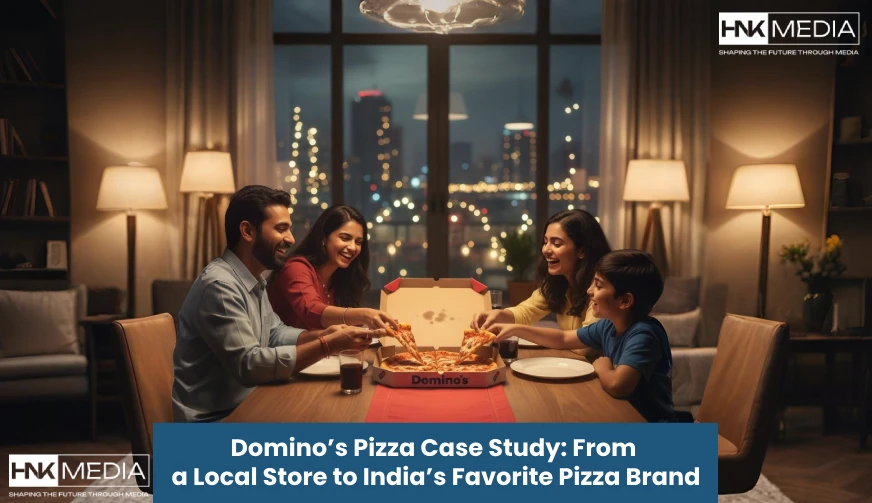
Instead of positioning pizza as a Western luxury, Domino’s made it a part of Indian family life. Campaigns like “Yeh Hai Rishton Ka Time” (It’s Time for Relationships) showed pizza as something to share during family moments, parties, or celebrations.
• Affordable Offers
Domino’s smartly introduced everyday value meals, combo offers, and Buy 1 Get 1 deals. These made pizza accessible to students, couples, and families.
• Consistent Messaging
Its catchy tagline “Hungry Kya?” became iconic — short, playful, and easy to remember. It made Domino’s sound friendly and relatable.
• Regional and Digital Marketing
Domino’s created regional menus, local-language ads, and strong social media engagement. On Instagram and YouTube, Domino’s shared behind-the-scenes clips, user stories, and quick recipes — building a loyal community.
Domino’s didn’t just market pizza. It marketed moments of joy, and that emotional connect became the heart of its success.
6. Competition in India – Staying Ahead
The food delivery landscape changed massively with the rise of Zomato, Swiggy, Pizza Hut, and McDonald’s. Each offered convenience and choice. Yet Domino’s remained a leader.
• Why Domino’s Stayed on Top
- Own Delivery Fleet: Domino’s didn’t depend on third-party apps for delivery. This gave them full control over time, quality, and customer experience.
- Store Density: With over 1,800 stores in India, Domino’s ensured there was always a store close enough to meet the 30-minute target.
- Affordability: Competitors focused on variety; Domino’s focused on value and speed.
• Competing with Aggregators
Even when Zomato and Swiggy allowed other pizza brands to sell online, Domino’s still drove the majority of orders through its own app, retaining direct customer data — a crucial long-term business advantage.
7. The COVID-19 Impact – Turning Crisis into Opportunity
When COVID-19 hit in 2020, the food industry collapsed overnight. Restaurants closed, and customers feared ordering food. Domino’s acted quickly.
• Contactless Delivery
Domino’s became the first major QSR brand in India to introduce contactless delivery — ensuring zero physical contact between staff and customers.
They launched a “Zero Contact Cooking & Delivery” campaign backed by videos showing hygiene protocols. This transparency rebuilt customer trust.
• Digital Campaigns
During lockdown, Domino’s ran the “Stay Home, Stay Safe, Order Domino’s” campaign. The brand used humor and empathy to remind people that comfort food can still bring happiness in tough times.
• DIY Kits and Community Support
They also introduced DIY Pizza Kits for families stuck at home and donated meals to frontline workers, enhancing their reputation as a responsible brand.
Despite the crisis, Domino’s managed to grow — proving that adaptability and customer trust are the true ingredients for long-term success.
8. 2025 – Data-Driven Growth and Future Strategy
As of 2025, Domino’s India continues to lead the market with new innovations and deeper digital integration.
• AI and Analytics
Domino’s uses data analytics to predict customer preferences, optimize delivery routes, and even forecast busy hours.
AI now personalizes menu recommendations for every user, increasing engagement and sales.
• Expansion in Tier-2 and Tier-3 Cities
Jubilant FoodWorks is aggressively opening stores in smaller towns. Affordable pricing, mobile apps, and localized flavors are driving this rural expansion.
• Sustainability and Responsibility
Domino’s is investing in eco-friendly packaging and electric delivery bikes to reduce its carbon footprint — appealing to young, conscious consumers.
• The Role of Loyalty and Retention
Through the Domino’s app, customers earn points, track past orders, and access exclusive deals — building a loyalty ecosystem similar to major e-commerce players.
With these strategies, Domino’s aims to keep its leadership position while transforming into a digital-first food company rather than just a pizza chain.
9. The Domino’s Success Story in India – Why It Worked
- Localization: Indian flavors, vegetarian options, and region-specific menus helped connect with local customers.
- Speed and Service: The 30-minute delivery rule built trust and made Domino’s synonymous with reliability.
- Technology: Early investment in mobile apps and delivery tracking set them years ahead of competitors.
- Marketing with Emotion: Domino’s turned pizza into a part of Indian celebrations and relationships.
- Franchise Power: The partnership with Jubilant FoodWorks ensured strong local management and scalability.
Together, these factors made Domino’s India one of the most profitable Domino’s markets globally.
10. Lessons for Businesses and Startups
Domino’s India journey offers several valuable lessons:
- Speed is Strategy: In any business, being fast and reliable builds long-term customer loyalty.
- Localize to Grow: Adapting products to local culture makes global brands feel personal.
- Technology Wins: Investing early in digital tools, apps, and AI ensures scalability.
- Consistency Builds Trust: The 30-minute promise worked because Domino’s consistently delivered.
- Crisis Creates Opportunity: The pandemic proved that agility can turn setbacks into growth.
For Indian startups and brands, Domino’s is a masterclass in operational discipline, emotional branding, and smart technology use.
11. Frequently Asked Questions (FAQs)
Q1. What is the story behind Domino’s Pizza?
Domino’s was founded in 1960 in Michigan by Tom and James Monaghan. It started as a single pizza shop and grew into a global chain with over 20,000 outlets. In India, it entered in 1996 through Jubilant FoodWorks.
Q2. What is the 2-minute rule in Domino’s?
The “2-minute rule” is an internal system where each pizza moves through every stage of preparation — dough, toppings, baking, and packing — within two minutes. This ensures efficiency and supports the 30-minute delivery promise.
Q3. Is the 30-minute pizza rule real?
Yes. Domino’s built its global brand around the 30-minute guarantee. While the “free pizza” policy was later discontinued for safety reasons, the speed standard remains central to its brand identity.
Q4. What is the success story of Domino’s in India?
Domino’s success in India comes from local menu innovation, fast delivery, affordable pricing, and strong emotional branding. Its ability to combine technology, trust, and Indian taste made it the country’s favorite pizza brand.
Q5. Who owns Domino’s India?
Domino’s India is operated by Jubilant FoodWorks Limited, which holds exclusive franchise rights for India, Bangladesh, Nepal, and Sri Lanka.
Q6. What is Domino’s strategy for 2025?
Domino’s is focusing on AI-driven personalization, sustainable packaging, expansion in smaller towns, and strengthening its loyalty program through digital channels.
12. Conclusion – The Power of Simplicity and Speed
Domino’s Pizza didn’t become India’s No.1 pizza brand by chance. It earned that title through speed, consistency, and emotional connection.
By understanding the Indian market, adapting its menu, and investing in technology, Domino’s built a business that’s not just profitable but also trusted.
From a single store in Michigan to over 1,800 stores in India, Domino’s story is proof that when you blend innovation, speed, and human emotion, you don’t just build a brand — you build a habit.


 Call 24/7 Hours+91 87677 68614
 Send Us Mail info@hnkmedia.com