Building organic traffic for a new website is one of the most difficult challenges in digital marketing. When a domain has no authority, no backlinks, and no existing search visibility, it is very difficult for search engines to trust the website. Many businesses launch a website expecting instant results from search engines, but the reality is that ranking requires a structured approach.
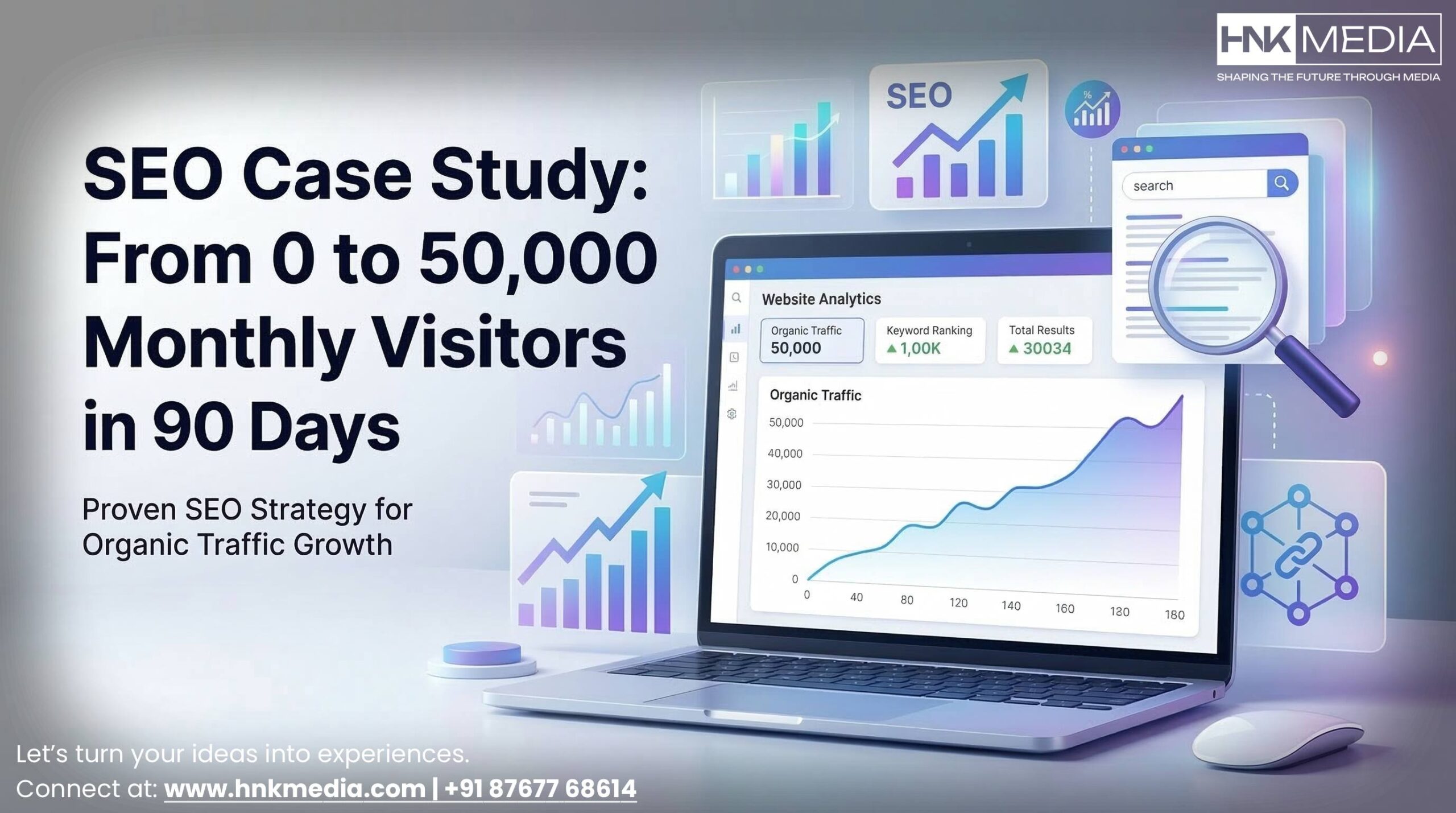
This SEO case study explains how a new website grew from zero traffic to more than 50,000 monthly visitors within 90 days using a carefully planned search optimization strategy.
The growth was achieved through a combination of several important factors including technical SEO improvements, keyword research, content marketing, internal linking, and structured content that supports modern search behavior.
Search engines today are not only evaluating keywords. They also evaluate expertise, trust, content quality, and user engagement signals. In addition, modern search environments include AI search systems and voice assistants that rely on structured information.
Because of this shift, the strategy used in this project included three key optimization layers:
• Search Engine Optimization (SEO) for traditional search rankings
• Answer Engine Optimization (AEO) for featured snippets and voice search
• Generative Engine Optimization (GEO) to appear in AI generated search summaries
Combining these strategies created a strong foundation for rapid organic growth.
The Problem: A New Website With No Search Visibility
Launching a new website is exciting, but gaining visibility in search engines is often the biggest challenge. Many startups assume that once their website goes live, traffic will automatically start coming from search engines. In reality, new domains usually struggle to rank because search engines do not yet trust them.
In this case study, the website had just launched and had almost no organic presence on search engines like Google. The domain was new, the content library was extremely small, and there were no backlinks pointing to the website. From a search engine’s perspective, the site lacked authority, credibility, and topical relevance.
During the initial review, several major issues were discovered that prevented the website from gaining visibility:
• No keyword research or SEO strategy
• Poor website structure and navigation
• Very limited blog content
• No internal linking between pages
• Slow loading speed affecting user experience
• No backlinks from other websites
Because of these issues, search engines had very little information to understand what the website was about. Even when a new blog post was published, it struggled to rank because the domain lacked trust signals.
Another problem was the absence of topical authority. Competing websites had already published dozens or even hundreds of articles covering related topics. In comparison, this new website had only a few pages.
Search engines prioritize websites that demonstrate expertise and depth of knowledge in a particular subject area.
Before focusing on traffic growth, it was necessary to build a strong SEO foundation.
The strategy started with a full website evaluation using tools such as Google Search Console, Ahrefs, and SEMrush to identify the technical and content gaps that needed to be fixed. This foundation would later play a crucial role in helping the website grow from zero visibility to 50,000 monthly organic visitors in just 90 days.
Step 1: Comprehensive SEO Audit
The first and most important step in the growth strategy was conducting a complete SEO audit. An SEO audit helps identify technical issues, structural problems, and optimization gaps that may prevent a website from ranking in search engines.
Search engines rely on many signals to evaluate websites. If technical errors exist, even high-quality content may struggle to rank. The audit was conducted using tools such as Google Search Console, Screaming Frog SEO Spider, and Ahrefs to analyze the website’s performance.
The audit focused on three major areas: technical SEO, on-page optimization, and content gaps.
Technical SEO Improvements
Technical SEO ensures that search engines can crawl and index website pages properly.
Several improvements were implemented:
• Improving page loading speed
• Optimizing mobile responsiveness
• Fixing crawl errors and broken links
• Creating an optimized XML sitemap
• Updating robots.txt rules
• Improving Core Web Vitals
These improvements ensured that search engine crawlers could easily navigate the website. Better page speed and performance also improved user experience, which indirectly supports higher rankings.
To learn more about technical SEO fundamentals, websites can refer to the official guidelines published by Google on their SEO documentation.
On-Page Optimization
Once the technical issues were resolved, each page was optimized with clear SEO signals.
This included:
• Optimized title tags and meta descriptions
• Proper H1, H2, H3 heading structure
• Keyword-focused introductions
• Image alt text optimization
• Improved readability and formatting
These improvements helped search engines better understand the relevance of each page.
Step 2: Keyword Strategy for Fast Ranking
Keyword research played a crucial role in the success of this project.
Many websites make the mistake of targeting high-competition keywords immediately. For new domains, this strategy rarely works because established websites already dominate those search results.
Instead, the focus was placed on low-competition long-tail keywords with strong search intent. Long-tail keywords may have lower search volume, but they offer a much higher chance of ranking for new websites. Research was conducted using tools like Ahrefs, Ubersuggest, and Google Keyword Planner.
Examples of selected keywords included:
• Beginner SEO guides
• Website traffic growth strategies
• SEO strategies to increase website traffic
• Content marketing for organic growth
These keywords were carefully chosen because they aligned with user intent while remaining achievable for a new domain.
Topic Cluster Strategy
Instead of publishing random articles, the website implemented a topic cluster model. This strategy organizes content around a central pillar topic supported by multiple related articles.
Structure example:
Pillar Article
“Complete Guide to SEO Traffic Growth”
Supporting Articles
• Keyword research strategies
• On-page SEO optimization guide
• Technical SEO checklist
• Content marketing for organic traffic
Each supporting article linked back to the pillar page. This internal structure helped search engines recognize the website as a trusted resource on SEO topics.
Learn more about SEO keyword research strategies
Step 3: Content Strategy for Organic Growth
Content became the main driver behind the website’s traffic growth. Instead of publishing short blog posts, the strategy focused on high-quality long-form content that fully answered user questions. Search engines increasingly prioritize helpful, informative content. This aligns with the Helpful Content System introduced by Google.
Each article followed a structured format designed to maximize SEO value:
• Keyword-optimized headline
• Clear introduction explaining the topic
• Detailed sections with headings
• Practical examples and actionable advice
• Internal links to related content
• FAQ sections for AEO optimization
This structure helped both users and search engines understand the article easily.
The content strategy also emphasized topical authority. Instead of writing about many unrelated topics, the website focused primarily on SEO, digital marketing, and website growth strategies. Within 90 days, the website published more than 40 optimized articles targeting different keyword opportunities.
• Learn more about technical SEO best practices
• Read our complete guide to content marketing
Publishing consistent, well-researched articles helped the website expand its keyword coverage and gradually build authority in the niche.
Step 4: Internal Linking Strategy to Rank Faster
Internal linking is one of the most underestimated SEO techniques, yet it plays a major role in improving search rankings. Internal links help search engines understand the relationship between different pages on a website. When pages are connected through relevant internal links, authority can flow from stronger pages to newer pages.
In this project, a structured internal linking strategy was implemented across all blog content.
Each article linked to:
• Related blog posts
• Pillar articles
• Category pages
For example, an article about SEO keyword research linked to the main pillar article about SEO traffic growth. This created a strong content network that helped search engines understand the website’s topical expertise.
Benefits of internal linking included:
• Better crawlability for search engines
• Faster indexing of new pages
• Stronger topical authority
• Improved user navigation
Search engines like Google use internal links as signals to understand which pages are most important. For best practices, websites can review Google’s official documentation on internal linking.
A strong internal linking structure also encourages users to explore more pages, which increases average session duration and reduces bounce rate.
Step 5: AEO Optimization for AI and Voice Search
Search behavior is evolving rapidly. Many users now rely on voice assistants and AI search engines to find information quickly. This shift has created a new SEO discipline known as Answer Engine Optimization (AEO).
AEO focuses on structuring content so that search engines and AI systems can easily extract direct answers from web pages. The strategy implemented several AEO techniques.
Each article included:
• Question-based headings
• Concise answer paragraphs
• Structured lists
• FAQ sections
These formats improve the chances of appearing in featured snippets and voice search results.
Voice assistants such as Google Assistant, Amazon Alexa, and Apple Siri often rely on well-structured content to provide spoken answers.
For example:
Heading:
“What is the fastest way to increase website traffic?”
Direct answer paragraph follows immediately below. This structure helps search engines identify clear answers. Additionally, FAQ sections were added at the end of many articles. These FAQs were optimized with FAQ schema markup, increasing the chances of appearing in rich search results.
By combining traditional SEO with AEO strategies, the website improved its visibility not only in search results but also in AI-generated answers.
Step 6: GEO Optimization for AI Search Results
Another emerging concept in modern SEO is Generative Engine Optimization (GEO).
GEO focuses on optimizing content for AI platforms that generate answers or summaries from multiple sources. AI tools like ChatGPT, Google Gemini, and Microsoft Copilot are increasingly influencing how people discover information online. These AI systems analyze large volumes of web content and extract insights to generate responses. To improve visibility in AI search ecosystems, the website implemented several GEO principles.
The content was structured with:
• Clear logical headings
• Well-organized sections
• Expert insights and detailed explanations
• Factual data and examples
AI systems tend to reference content that demonstrates authority, clarity, and depth. Another important GEO strategy was ensuring that articles covered topics comprehensively rather than superficially. Instead of short posts, the website focused on detailed guides exceeding 2,000 words.
This increased the likelihood that AI systems would reference the content when generating summaries. As AI-driven search becomes more common, GEO optimization will become an essential part of future SEO strategies.
Step 7: Strategic Backlink Acquisition
Backlinks remain one of the strongest ranking factors in SEO.
Search engines view backlinks as signals of trust and authority. When reputable websites link to a page, it suggests that the content is valuable.,However, the focus was not on acquiring large quantities of links. Instead, the strategy prioritized high-quality backlinks from relevant websites.
Several link-building methods were used. Guest blogging on niche websites helped generate contextual backlinks. Directory listings in relevant industry platforms also provided early authority signals. The strategy included mentions from marketing blogs and collaborations with content creators.
Tools such as Ahrefs and Moz were used to monitor backlink growth and domain authority. Even a small number of strong backlinks significantly improved the website’s credibility in search engines.
For learning backlink best practices, marketers often refer to guidelines from Moz.
Over time, the combination of content quality and strategic backlinks helped the website gain trust and improve search rankings.
Results: From Zero to 50,000 Monthly Visitors
After implementing the full SEO strategy, the website experienced rapid growth in search visibility. Within 90 days, the results were impressive.
The website achieved:
• 50,000 monthly organic visitors
• over 400 ranking keywords
• multiple articles ranking on page one of Google
• several featured snippets and AI answer placements
Organic search quickly became the largest traffic source for the website. Instead of relying on paid advertising, the business was now attracting a consistent stream of visitors through search engines. More importantly, this growth was sustainable. Because the strategy focused on building topical authority and helpful content, traffic continued increasing even after the initial 90-day period.
Analytics tools such as Google Analytics and Google Search Console confirmed the steady improvement in impressions, clicks, and keyword rankings.
Key Lessons From This SEO Case Study
Several important insights emerged from the project.
Strategic Keyword Selection
Choosing achievable keywords helped the website gain early traction.
Content Depth Matters
Long-form, high-quality content tends to rank for multiple search queries.
Internal Linking Strengthens Authority
Connecting related content improves rankings and user experience.
AI Optimization Is Increasingly Important
Optimizing for AEO and GEO improves visibility across modern search systems.
FAQ
What is an SEO case study?
An SEO case study explains how a website improved its search engine rankings and organic traffic using specific optimization strategies such as keyword research, technical SEO, and content marketing.
How can a new website grow traffic quickly?
A new website can grow traffic quickly by targeting low-competition keywords, publishing high-quality content regularly, and building strong internal links between related pages.
What is topical authority in SEO?
Topical authority means publishing multiple high-quality articles about a specific subject so search engines recognize the website as an expert source.
Why is internal linking important for SEO?
Internal linking helps search engines understand relationships between pages and distributes ranking authority throughout the website.
What role does content play in SEO growth?
Content helps search engines understand what a website is about and provides valuable information that attracts organic search traffic.
How many blog posts are needed to grow organic traffic?
There is no exact number, but many websites begin seeing strong traffic growth after publishing 30 to 50 high-quality articles targeting relevant keywords.
Does website speed affect SEO?
Yes. Faster websites provide better user experience and are more likely to rank higher in search results.
What is Answer Engine Optimization?
Answer Engine Optimization focuses on structuring content so it can appear in featured snippets, voice search results, and AI generated answers.
What is Generative Engine Optimization?
Generative Engine Optimization prepares content to be used by AI search systems that summarize information from multiple sources.
How long does it take to reach 50,000 monthly visitors with SEO?
The timeline varies depending on competition, content quality, and strategy, but some websites can reach this milestone within three to six months.
Final Thought
At HNK Media, we believe that sustainable SEO growth is never the result of shortcuts or quick tricks. Real success in search comes from combining technical expertise, strategic planning, and consistent high-quality content.
This case study clearly demonstrates that even a brand-new website can achieve significant traffic growth when the right strategy is applied.
The key factors behind the success included:
• A strong technical SEO foundation
• Data-driven keyword research
• Topic cluster based content strategy
• Strategic internal linking
• High-quality backlinks
• Optimization for both traditional search and AI-driven discovery
Today, SEO is no longer limited to ranking on search engines alone. Businesses must optimize for AI search platforms, voice assistants, and generative answer engines. That is why our approach integrates SEO, AEO, and GEO strategies together.
By focusing on real user value and long-term authority, websites can build sustainable organic growth that continues generating traffic for years.
For businesses looking to achieve similar results, the most important step is partnering with a team that understands both search algorithms and user behavior.
At HNK Media, our goal is simple:
help brands grow through smart strategy, creative execution, and measurable digital results.

 Call 24/7 Hours +91 87677 68614
 Send Us Mail info@hnkmedia.com