Introduction
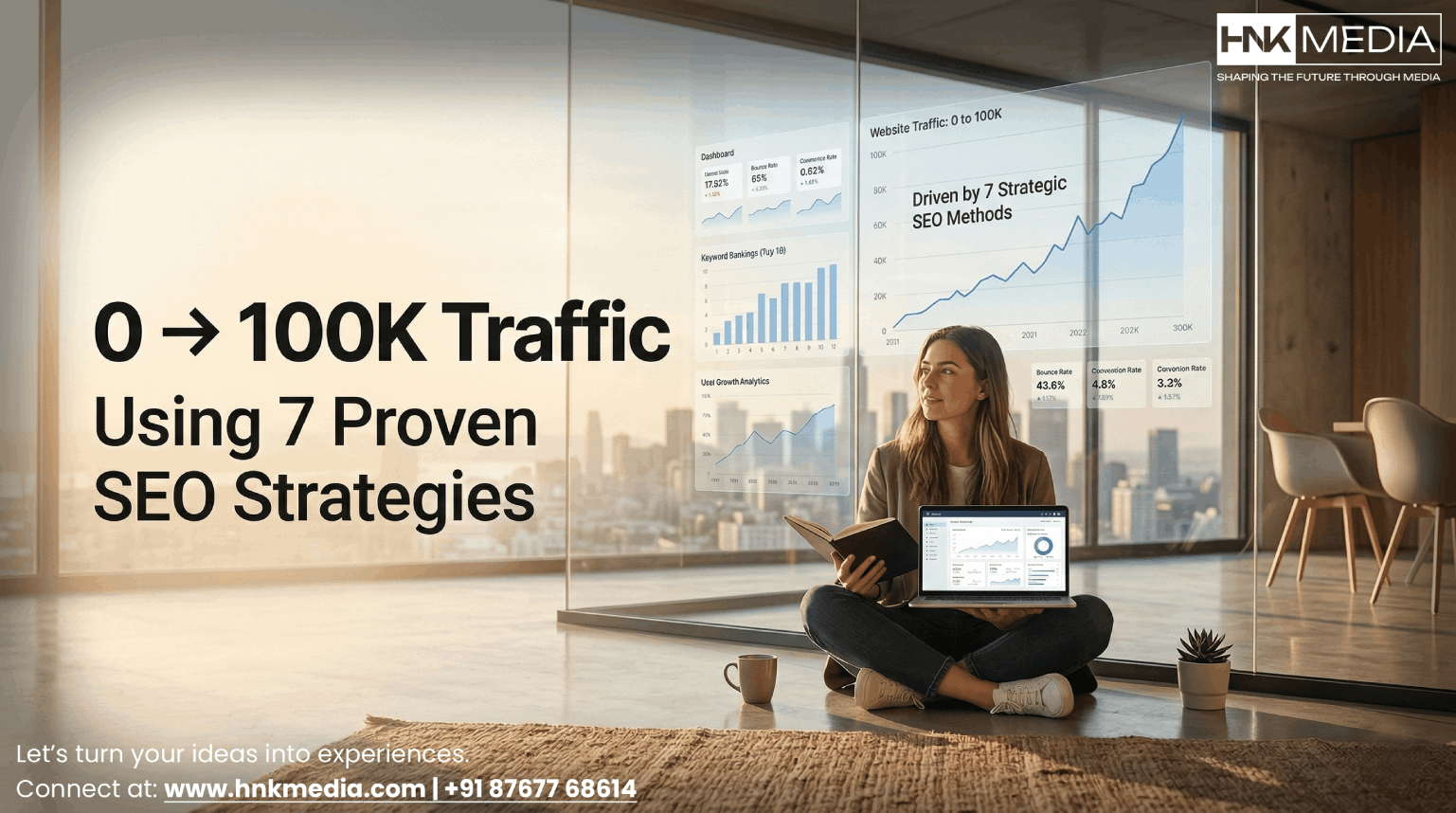
Growing a website from zero to more than one hundred thousand monthly visitors is possible when the right SEO strategies to increase website traffic are applied consistently. Many successful websites did not start with large budgets or big marketing teams. Instead, they grew step by step by understanding how search engines evaluate content and how users search for information online.
Reaching this level of organic growth rarely happens by accident. Behind every high-traffic website is a well-planned SEO structure that focuses on content quality, search intent, and long-term authority building.
Many website owners begin their blogging journey with excitement. They publish articles regularly and expect traffic to grow automatically. However, after months of effort, they often realize that their website still receives very little organic traffic. This situation usually happens when the SEO approach lacks direction or does not align with how modern search engines rank content.
Through years of SEO research, experimentation, and analysis of real websites, one important pattern becomes clear. Websites that successfully grow their organic traffic follow a combination of strategic keyword research, topical authority development, high-quality content creation, and strong internal linking structures.
These websites do not rely on random publishing or short-term tactics. Instead, they build a complete content ecosystem that helps search engines understand their expertise, authority, and relevance in a specific topic.
This article explores seven powerful SEO strategies that helped a website grow from zero to more than one hundred thousand monthly visitors. The insights shared here come from practical case studies, long-term SEO experimentation, and research based on real-world website performance.
Rather than focusing on quick tricks or temporary ranking tactics, the goal is to understand the deeper mechanisms behind sustainable organic traffic growth. When these strategies are applied consistently, websites can build strong authority, improve search rankings, and attract long-term organic traffic from search engines.
Understanding the Journey From 0 to 100K Traffic
Before exploring the strategies, it is important to understand how SEO strategies to increase website traffic actually work in real-world situations. Organic traffic growth usually follows a gradual and predictable pattern. SEO results rarely appear instantly. In fact, the early phase often feels slow and uncertain for many websites.
During the first few months, search engines are still learning about the website. They analyze content quality, user engagement signals, topical relevance, and backlink profiles. This period is often described as the trust-building phase, where search engines evaluate whether the website provides consistent value to users.
Once search engines begin recognizing the website as a credible information source, rankings start improving. More pages begin appearing in search results, impressions increase, and organic traffic starts growing steadily. This stage shows that the website is building topical authority and gaining trust in its niche.
Over time, the compounding effect of quality content, strong internal linking, and strategic backlinks accelerates traffic growth. Instead of relying on just a few pages, the website starts generating traffic from dozens or even hundreds of search queries.
The SEO strategies to increase website traffic discussed below played a critical role in achieving this milestone and building sustainable organic growth.
1. Starting With Low-Competition Keywords
One of the biggest mistakes new websites make is targeting extremely competitive keywords too early. Large websites with high authority dominate these search terms, making it difficult for smaller sites to rank.
The successful approach in this case study involved focusing on low-competition keywords during the early stage of growth.
Long-tail keywords became the primary focus. These are longer search phrases that typically have lower search volume but much lower competition.
For example, instead of targeting a broad keyword such as “SEO tools,” the content strategy targeted more specific phrases like:
- best SEO tools for beginners
- free keyword research tools for bloggers
- SEO tools for small business websites
Although each keyword individually attracts fewer searches, together they create a powerful traffic foundation.
From a research perspective, long-tail keywords help websites enter the search ecosystem. They allow new domains to gain visibility, earn impressions, and start building credibility in search engines.
Once authority grows, the website becomes capable of ranking for broader and more competitive keywords.
2. Building Topical Authority
Another crucial factor behind the traffic growth was the decision to build topical authority instead of publishing random blog posts.
Search engines increasingly prioritize websites that demonstrate deep expertise within a particular subject area. When a website consistently publishes high-quality content around a core topic, search engines begin recognizing it as a trusted knowledge source.
The website in this case study adopted a topic cluster strategy. Instead of isolated articles, content was organized into groups that covered related subjects.
For example, if the main topic was SEO, the website created multiple supporting articles around that theme. These included keyword research guides, backlink strategies, technical SEO tutorials, and on-page optimization techniques.
Each article linked to other relevant articles within the cluster. This internal structure strengthened topical signals and improved overall search visibility.
From an SEO research perspective, topical authority significantly increases the chances of ranking for competitive keywords because search engines prefer authoritative content hubs rather than scattered information sources.
3. Creating Comprehensive Content
High-quality content was another major driver behind the traffic growth. Instead of publishing short blog posts, the website focused on creating comprehensive resources that thoroughly explained each topic.
Long-form content allowed the writer to explore different aspects of a subject. This included explanations, examples, practical tips, and frequently asked questions.
The average article length ranged between 2000 and 3500 words. However, the goal was not simply to increase word count. The focus remained on delivering meaningful value to readers.
From an SEO perspective, comprehensive content provides several advantages. It increases the chances of ranking for multiple keywords because each section of the article may target a different search query.
In addition, detailed content often earns backlinks naturally because other websites prefer linking to in-depth resources rather than brief summaries.
Over time, these long-form articles became cornerstone content pieces that attracted significant organic traffic.
4. Strategic Internal Linking
Internal linking played a surprisingly powerful role in improving search visibility and organic growth. Many websites publish helpful articles regularly, but they often miss an important opportunity: connecting those articles in a logical and meaningful way. When pages exist in isolation without internal links, search engines struggle to understand how different topics on the website relate to each other. As a result, valuable content may remain hidden or take longer to rank.
In this case study, the website implemented a well-structured internal linking strategy as part of its broader SEO strategies to increase website traffic. Instead of treating each blog post as a separate piece of content, the team created connections between related articles. Every new article included links to several relevant pages within the website. These links were added naturally within paragraphs so they felt useful to readers rather than forced.
This approach improved the overall content structure of the site. When search engines crawled the pages, they could easily understand topic relationships. For example, an article about keyword research could link to deeper guides on content planning, on-page optimization, or SEO tools. These contextual links signaled to search engines that the website covered a complete topic cluster.
Internal linking also created several important benefits for long-term SEO performance. First, it helped search engines crawl the website more efficiently. When pages link to each other logically, search engine bots can discover new content faster. Second, internal links distribute page authority across multiple pages. A strong article that earns backlinks can pass some of its authority to other relevant pages through internal links. Over time, this strengthens the entire website instead of only a few pages.
Another important advantage is improved user experience. When readers find useful links inside an article, they are more likely to explore additional content on the website. This increases session duration and reduces bounce rate, which are positive signals for search engines. Readers also gain deeper knowledge because they can easily navigate between related topics.
For example, when a blog discusses keyword research strategies, it can naturally guide readers toward related resources such as content planning, SEO analytics, or organic growth techniques. This type of structure supports SEO strategies to increase website traffic because it creates a clear content ecosystem rather than isolated posts.
On professional websites such as HNK Media, internal linking between blog articles and service pages strengthens the overall SEO framework while helping readers discover relevant solutions. Educational blog posts provide insights, while service pages offer practical implementation. This balanced structure builds authority, trust, and topical relevance.
Some natural internal link examples within such content structures include:
- SEO strategy insights
- content marketing research
- digital growth strategies
When these connections are implemented thoughtfully, they improve both search visibility and reader engagement. Over time, strong internal linking becomes one of the most reliable foundations for sustainable organic traffic growth.
5. Aligning Content With Search Intent
Search intent became another critical factor in improving rankings.
Search engines aim to provide results that match what users actually want. Therefore, content must align with the purpose behind a search query.
For example, someone searching “how to increase organic traffic” expects a detailed guide rather than a short opinion piece.
During the research phase, top-ranking pages were analyzed carefully. Their structure, content depth, and formatting patterns provided insights into what users expected.
The website then created content that directly addressed those expectations.
Each article answered common questions, provided clear explanations, and delivered actionable insights.
This approach improved engagement metrics such as time on page and reduced bounce rates. As a result, search engines began ranking the content higher.
6. Maintaining a Consistent Publishing Schedule
Consistency also played a major role in traffic growth.
Publishing content regularly signals to search engines that a website remains active and continuously expanding its knowledge base.
Instead of posting large amounts of content at once and then stopping, the website maintained a steady publishing schedule.
New articles were published every week. Older content was also updated periodically to keep information accurate and relevant.
This consistent approach gradually expanded the website’s content library. Each new article added another potential entry point for organic traffic.
From a research standpoint, websites that maintain steady content production often experience stronger long-term growth compared to those that publish sporadically.
7. Earning Natural Backlinks
Backlinks continue to be one of the strongest ranking signals in SEO. However, modern SEO focuses more on earning links naturally rather than building them artificially.
The case study website concentrated on producing valuable content that other websites wanted to reference. In-depth guides, research-based articles, and educational resources often attract organic backlinks.
The website also collaborated with other creators, participated in industry discussions, and contributed guest insights. These activities increased visibility and gradually expanded the backlink profile.
From a research perspective, natural backlinks are far more sustainable because they reflect genuine trust and authority.
The Compounding Effect of SEO
One fascinating observation during the traffic growth journey was the compounding nature of SEO.
At first, traffic increased slowly. However, as more content was published and more pages began ranking, growth accelerated significantly.
Each new article created additional opportunities for search visibility. Internal links strengthened existing pages, while backlinks increased domain authority.
Eventually, many pages started ranking for multiple keywords simultaneously. This cumulative effect pushed the website beyond the 100,000 monthly visitor milestone.
SEO often appears slow in the beginning, but consistent effort produces powerful long-term results.
Frequently Asked Questions
How long does it take to reach 100K traffic with SEO?
Reaching 100K monthly organic traffic usually takes around 12 to 24 months for most websites. The exact timeline depends on the competition in your niche, the quality of your content, and how consistently you publish new articles.
Websites that focus on strong keyword research, publish helpful content regularly, and build authority through backlinks tend to grow faster. With the right SEO strategies to increase website traffic, steady growth becomes much more achievable over time.
What is the most important factor for SEO growth?
The most important factor behind sustainable SEO growth is high-quality content that solves real user problems. Search engines prioritize content that is useful, trustworthy, and clearly structured.
In addition to great content, proper keyword research, internal linking, and technical optimization also play a significant role in improving rankings and organic traffic.
Can a new website rank on Google quickly?
Yes, a new website can rank relatively quickly if it targets low-competition long-tail keywords and focuses on specific search intent.
Instead of trying to compete with large websites immediately, new sites should focus on smaller opportunities and gradually build authority. Over time, this approach helps the site rank for more competitive keywords.
How many blog posts are needed to reach 100K traffic?
There is no exact number, but many websites reach this milestone with 100 to 300 well-optimized articles. The key factor is not the quantity alone but the quality and relevance of the content.
Websites that publish structured content around specific topics and maintain consistency often achieve stronger organic growth.
Do backlinks still matter for SEO?
Yes, backlinks are still one of the strongest ranking signals used by search engines. They act as recommendations from other websites and help build trust and authority.
However, quality matters more than quantity. Links from relevant and trusted websites provide far more value than large numbers of low-quality links.
Is long-form content better for SEO?
Long-form content often performs better because it covers a topic in greater detail and answers multiple related questions within a single article.
When written clearly and structured properly, long articles can rank for many related keywords and attract consistent organic traffic.
What is topical authority in SEO?
Topical authority means becoming a trusted source of information for a specific subject. This happens when a website publishes multiple in-depth articles that cover different aspects of the same topic.
Building topical authority is one of the most effective SEO strategies to increase website traffic, because it helps search engines recognize the website as an expert resource.
Final Thoughts
Organic traffic growth rarely happens overnight. Most websites that reach large traffic milestones follow a disciplined process built around research, consistency, and continuous improvement.
From the perspective of HNK Media, successful SEO strategies are never based on shortcuts or temporary tactics. Sustainable search growth comes from a combination of well-researched content, strong technical foundations, and a long-term commitment to quality.
Websites that grow from zero traffic to significant organic visibility usually follow the same underlying principles. They focus on solving real user problems, publishing helpful content regularly, improving website structure, and earning trust from both readers and search engines.
SEO in 2026 is no longer about simply inserting keywords into articles or building random backlinks. Search engines now evaluate expertise, content depth, user engagement, and credibility across an entire website ecosystem.
That is why modern SEO strategies require a holistic approach that combines:
- High-quality research-driven content
- Strong on-page SEO structure
- Technical optimization for performance and indexing
- Strategic internal linking between related topics
- Ethical backlink acquisition from trusted platforms
When these elements work together, search engines begin to recognize the website as a reliable information source within its niche.
The most successful websites treat SEO as a long-term digital asset, not a quick traffic trick. Every article becomes part of a larger knowledge system that strengthens topical authority over time.
This approach is central to the philosophy followed at HNK Media, where digital experiences are designed to combine strategy, research, and creative execution. Instead of chasing short-term ranking hacks, the focus remains on building meaningful content ecosystems that continue generating organic traffic month after month.
For brands, startups, and digital platforms looking to scale organic visibility, the key takeaway is simple: focus on providing real value, maintain consistency in publishing, and continuously refine the strategy using data insights.
When SEO is approached with patience, expertise, and a clear long-term vision, traffic growth becomes a natural outcome of building genuine authority online.

 Call 24/7 Hours +91 87677 68614
 Send Us Mail info@hnkmedia.com